
Eric Walsh · on 18 July 2026 · 6 min read · Last reviewed 18 July 2026
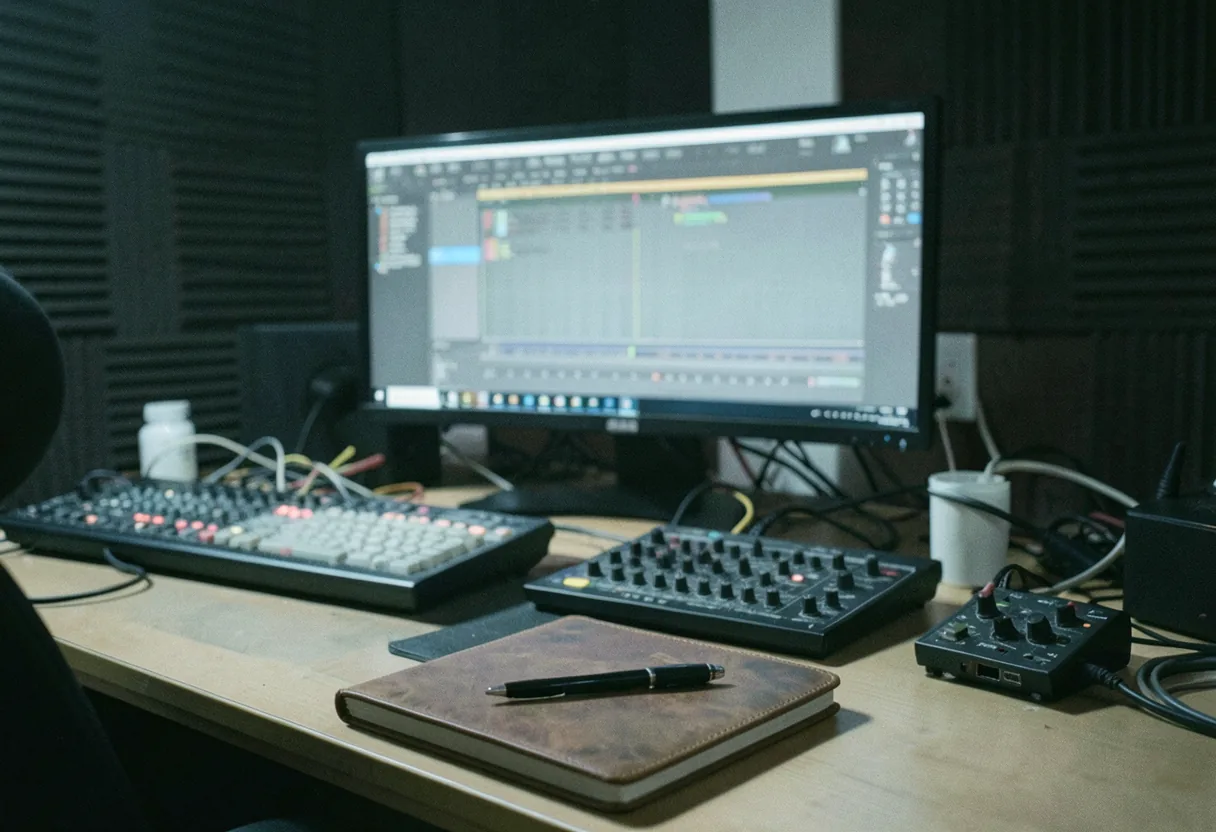
Music producer tools are specialized software and hardware that musicians and producers use to create, record, mix, and master audio content. Think of them as the paintbrushes and palette of a digital artist, enabling precise control over every note and nuance in a musical composition.
In plain terms: These tools are like the Swiss Army knife of music production, offering everything from recording and editing to sound design and mixing, all in one suite.
Key facts
- The global market for music production software is expected to grow at a CAGR of 4.5% from 2023 to 2030, according to Statista.
- Hardware tools, such as audio interfaces and MIDI controllers, are essential for translating musical ideas into digital formats.
- Popular software options include Ableton Live, Logic Pro, and FL Studio, each offering unique features tailored to different production styles.
- According to a survey by Sweetwater Sound, 70% of professional producers use a combination of software and hardware tools.
The essential categories of music producer tools
Music producer tools fall into two main categories: software and hardware. Software tools are digital applications that run on computers and offer a wide range of functionalities, from recording and editing to mixing and mastering. Hardware tools, on the other hand, are physical devices that interface with software to capture and manipulate audio signals.
Put simply: Software is the brain, while hardware is the body of music production, each playing a crucial role in the creative process.
Key facts
- Software tools like Ableton Live and Logic Pro are widely used for their comprehensive feature sets and user-friendly interfaces.
- Hardware tools, such as audio interfaces and MIDI controllers, are essential for translating musical ideas into digital formats.
- The cost of music production tools can vary widely, from affordable options like GarageBand to high-end solutions like Pro Tools.
- According to a survey by Sweetwater Sound, 70% of professional producers use a combination of software and hardware tools.
Top software options for music producers
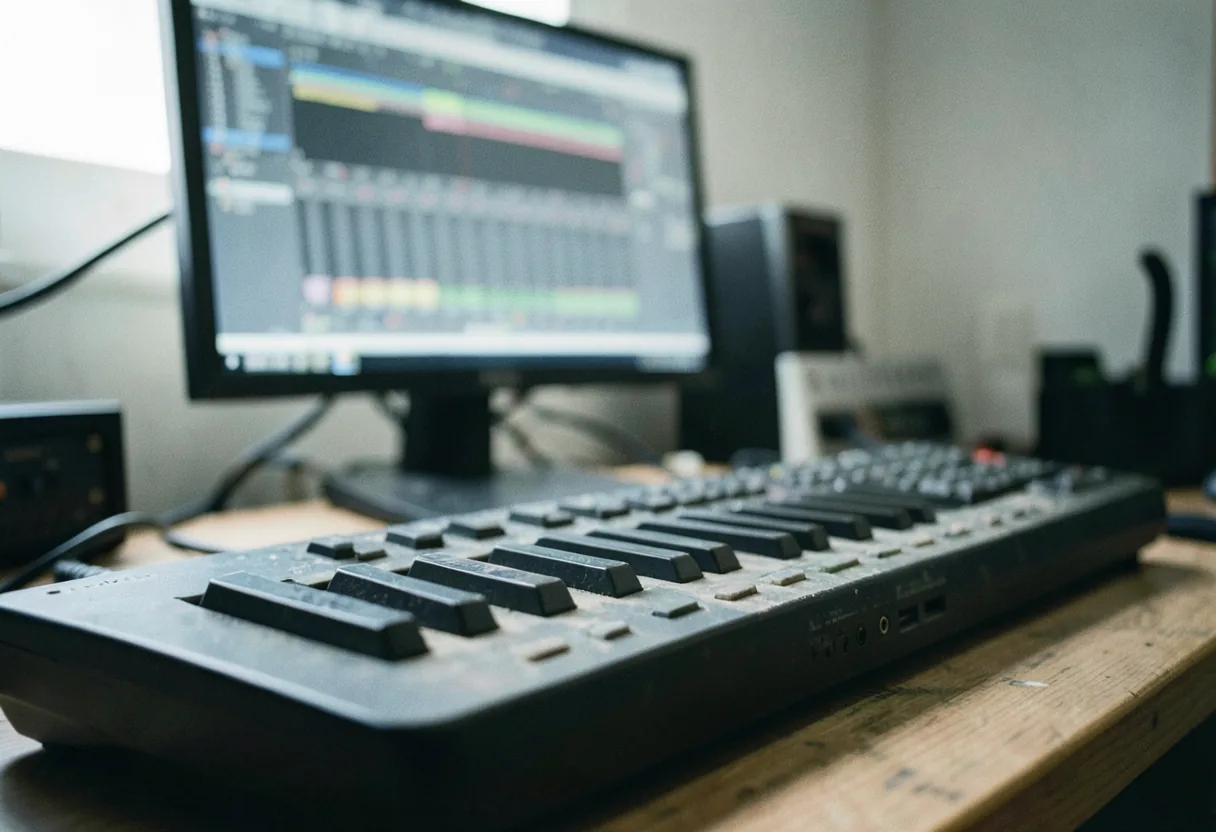
Choosing the right software is crucial for music producers. Here are some of the top options available in 2024:
| Software | Key Features | Price | Best For |
|---|---|---|---|
| Ableton Live | Live performance, intuitive workflow, extensive library of sounds | $99 – $749 | Electronic music producers |
| Logic Pro | Advanced editing tools, high-quality instruments, and smooth operation within the Apple ecosystem | $199 | Mac users, songwriters |
| FL Studio | User-friendly interface, powerful sequencer, extensive plugin support | $99 – $499 | Hip-hop and EDM producers |
| Pro Tools | Industry standard for mixing and mastering, extensive plugin support | $29.99/month | Professional studios |
Top hardware options for music producers
Hardware tools are equally important for music producers. Here are some of the top options available in 2024:
| Hardware | Key Features | Price | Best For |
|---|---|---|---|
| Focusrite Scarlett 2i2 | High-quality preamps, sturdy construction, simple setup | $249 | Home studio producers |
| Native Instruments Komplete Kontrol S61 | Integrated software/hardware workflow, extensive sound library, touch-sensitive knobs | $799 | Producers using Native Instruments software |
| AKAI Professional MPK Mini MK3 | Compact design, 25-key velocity-sensitive keyboard, extensive control options | $159 | Mobile producers |
| Universal Audio Apollo Twin | High-quality conversion, real-time UAD processing, Thunderbolt connectivity | $999 | Professional producers |
How to choose the right music producer tools
Choosing the right tools involves various aspects, such as your budget, the music you create, and your preferred workflow. Here are some important points to think about:
- Budget: Determine how much you are willing to spend on software and hardware. There are options available for every budget, from affordable entry-level tools to high-end professional equipment.
- Music Genre: Different genres require different tools. For example, electronic music producers may prioritize software with extensive sound libraries and live performance capabilities, while songwriters may focus on advanced editing tools and high-quality instruments.
- Workflow: Consider your preferred workflow. Some producers prefer a streamlined, all-in-one solution, while others may require a more modular setup with multiple tools.
- Compatibility: Ensure that your software and hardware are compatible with your computer and operating system. Check for system requirements and compatibility before making a purchase.
Who is the most educated rock star?
The most educated rock star is likely Brian May, the guitarist of Queen. May holds a Ph.D. in astrophysics from Imperial College London and has made significant contributions to the field of astrophysics.
The short version: Brian May’s dual career as a rock star and astrophysicist makes him a unique figure in the music industry.
Key facts
- Brian May completed his Ph.D. in astrophysics in 2007, decades after initially pursuing his musical career with Queen.
- His thesis focused on the motion of dust particles in the zodiacal light, a faint band of light visible in the night sky.
- May’s academic achievements have earned him recognition from the scientific community, including an honorary degree from the University of Hertfordshire.
Who is the most expensive singer to hire?
The most expensive singer to hire is typically Beyoncé. Known for her extravagant performances and high demand, Beyoncé’s fees can reach up to $2 million per show, according to industry reports.
At its core: Beyoncé’s combination of musical talent, stage presence, and global appeal makes her one of the most sought-after performers in the world.
Key facts
- Beyoncé’s fees can vary depending on the event and her schedule, but industry reports suggest that she commands up to $2 million per show.
- Her performances often include elaborate stage sets, costumes, and a large entourage, contributing to the high cost.
- Beyoncé’s popularity and influence extend beyond music, making her a sought-after performer for major events and brand collaborations.
What should a band bio include?
A band bio should include several key elements to effectively introduce the band and engage the audience. Here are the essential components:
- Introduction: Start with a brief introduction that includes the band’s name, genre, and location.
- History: Provide a brief history of the band, including when it was formed, key milestones, and notable achievements.
- Members: Introduce the band members, including their names, roles, and any relevant background information.
- Music: Describe the band’s musical style and influences. Include information about their albums, singles, and notable songs.
- Achievements: Highlight any awards, accolades, or notable performances the band has received.
- Future Plans: Share any upcoming projects, tours, or events the band has planned.
Who was Ozzy Osbourne’s favorite band?
Ozzy Osbourne’s favorite band is widely believed to be Black Sabbath, the heavy metal band he co-founded in the late 1960s. Osbourne has often cited Black Sabbath as a major influence on his musical career and has spoken highly of the band’s impact on the music industry.
Simply put: Black Sabbath’s pioneering role in the heavy metal genre and Osbourne’s personal connection to the band make it a natural favorite for the rock legend.
Key facts
- Black Sabbath, formed in Birmingham, England, in 1968, is often credited with creating the heavy metal genre.
- Osbourne’s time with Black Sabbath spanned from 1968 to 1979, during which the band released several influential albums, including “Paranoid” and “Master of Puppets.”
- Osbourne has often cited Black Sabbath’s unique sound and innovative approach to music as key influences on his solo career.
Band Bio and Discography Examples
Creating an effective band bio and discography requires a balance of personal storytelling and professional presentation. Here are some examples to inspire your own:
- Example 1: The Rolling Stones’ bio highlights their long-standing career, influential albums, and iconic status in rock history.
- Example 2: Radiohead’s bio emphasizes their innovative approach to music, experimental albums, and cultural impact.
- Example 3: Beyoncé’s bio showcases her evolution as an artist, from Destiny’s Child to her solo career, and her numerous achievements and accolades.
In my experience, a well-crafted band bio can capture the essence of a band’s identity and resonate with fans and industry professionals alike.
Join the movement and create a compelling band bio that tells your story and showcases your discography.
Frequently asked questions
What hardware is essential for a home studio setup?
A solid audio interface is your starting point. Focusrite Scarlett 2i2 offers excellent preamps for under $200. Add studio monitors like the Yamaha HS5 for accurate sound. Don’t forget headphones, closed-back models like the Audio-Technica ATH-M50x isolate sound well. A MIDI keyboard, such as the Akai MPK Mini, completes the basics for under $500 total.
Which DAW is best for beginners?
Ableton Live Intro is beginner-friendly, with a clear layout and great tutorials. FL Studio’s pattern-based workflow suits electronic music. Both offer free trials. For recording-focused work, GarageBand (free for Mac users) is surprisingly powerful. All include essential plugins for mixing and effects.
How do hardware synthesizers compare to software plugins?
Hardware synths like the Korg Minilogue offer tactile control and unique analog sounds. Software plugins, such as Serum or Massive, provide endless versatility and presets. Hardware excels in live performance; software wins for studio flexibility. Many producers use both, hardware for inspiration, software for production.
What’s the most cost-effective way to upgrade a studio?
Start with acoustic treatment, foam panels from Auralex reduce reflections for under $100. Upgrade your mic next; the Shure SM57 is a studio staple for $100. Finally, invest in cables and stands, cheap gear introduces noise. These upgrades significantly improve sound quality without breaking the bank.
Part of the Musician Tools & Production guide hub.